
Dumbbell Exercises for Strength and Definition: Unleash Your Back Power

How to Control Fleas in the Yard: Your Comprehensive Guide
October 28, 2024
Unlocking Your Thumb: Effective Exercises for Trigger Thumb
November 2, 2024
A strong back is crucial for overall fitness and a healthy posture. While barbells and machines have their place, dumbbells offer unique advantages for back development. They allow for a greater range of motion, encourage unilateral strength (working one side of the body at a time), and improve stability and coordination. When considering whether different workouts, like high-intensity routines, can aid in muscle growth, people often ask, does insanity build muscle as effectively as weightlifting? Insanity focuses on cardio and endurance, but combining it with dumbbell exercises can support balanced back strength and functional fitness.
This comprehensive guide will equip you with a variety of dumbbell back exercises, catering to different levels and targeting various back muscles. Remember to consult your doctor before starting any new workout routine.
Warm-up: Before diving into these exercises, prepare your body with a 5-10 minute warm-up. This could include light cardio, dynamic stretches like arm circles and torso twists, and some light reps of the exercises you plan to perform.
Exercises:
-
Bent-Over Rows:
This classic exercise targets the latissimus dorsi (lats), the large muscles on either side of your back.
- How-to: Stand with feet shoulder-width apart, knees slightly bent. Hinge at your hips, keeping your back straight. Hold dumbbells with a neutral grip (palms facing each other). Let the dumbbells hang towards the floor. Pull the dumbbells towards your chest, squeezing your shoulder blades together. Slowly lower the dumbbells back down.
- Tip: Maintain a flat back throughout the movement. Avoid using momentum to lift the weights.
- Variations: You can also perform this exercise with an overhand grip (palms facing down) or an underhand grip (palms facing up) to target slightly different muscle fibers. Explore Halosofhope blog to learn more about how grip variations can impact muscle engagement and help you achieve specific fitness goals.
-
Renegade Rows:
This exercise combines a plank with a row, challenging both your core and back muscles.
- How-to: Start in a high plank position with your hands gripping dumbbells shoulder-width apart. Keeping your core engaged and body stable, row one dumbbell up towards your chest, keeping your elbow close to your body. Lower the dumbbell back down and repeat on the other side.
- Tip: Focus on maintaining a straight line from your head to your heels throughout the movement. If you find it challenging to maintain stability, try performing the exercise with your knees on the ground.
-
One-Arm Dumbbell Rows:
This exercise allows you to focus on each side of your back individually, helping to correct any muscle imbalances.
- How-to: Place one knee and the same-side hand on a bench, keeping your back flat. With the other hand, hold a dumbbell with a neutral grip. Let the dumbbell hang towards the floor. Pull the dumbbell towards your chest, squeezing your shoulder blade. Slowly lower the dumbbell back down. Repeat on the other side.
- Tip: Keep your core engaged to prevent your torso from rotating.
-
Dumbbell Pullovers:
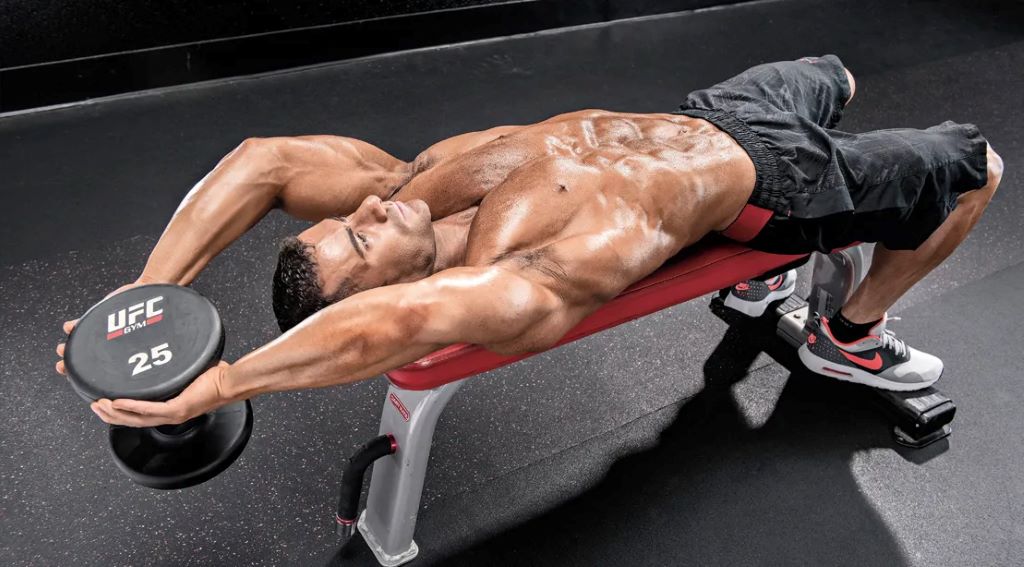
It primarily targets the lats but also engages the chest and triceps.
- How-to: Lie on a bench with your feet flat on the floor. Hold a dumbbell with both hands above your chest, palms facing each other. Keeping your arms slightly bent, slowly lower the dumbbell back over your head until you feel a stretch in your lats. Pull the dumbbell back to the starting position.
- Tip: Maintain control throughout the movement and avoid arching your back.
-
Dumbbell Shrugs:
This exercise targets the trapezius muscles (traps), which run along the top of your shoulders and back of your neck.
- How-to: Stand with feet shoulder-width apart, holding dumbbells with a neutral grip. Keeping your arms straight, shrug your shoulders up towards your ears. Hold for a moment, then slowly lower your shoulders back down.
- Tip: Focus on the contraction in your traps. Avoid rolling your shoulders forward or backward.
-
Reverse Flyes:
This exercise targets the rear deltoids (shoulders) and the rhomboids (upper back muscles).
- How-to: Stand with feet shoulder-width apart, knees slightly bent. Hinge at your hips, keeping your back straight. Hold dumbbells with a neutral grip. Let the dumbbells hang towards the floor. Keeping your arms slightly bent, raise the dumbbells out to the sides until they are parallel to the floor. Slowly lower the dumbbells back down.
- Tip: Maintain a slight bend in your elbows throughout the movement. Avoid using momentum to lift the weights.
-
Dumbbell Deadlifts:
This compound exercise works multiple muscle groups, including your back, glutes, and hamstrings.
- How-to: Stand with feet hip-width apart, holding dumbbells in front of your thighs. Keeping your back straight, slowly lower the dumbbells towards the floor by bending at your hips and knees. Keep the dumbbells close to your legs. Once you feel a stretch in your hamstrings, drive through your heels to stand back up.
- Tip: Maintain a flat back throughout the movement. Avoid rounding your back or locking your knees.
Cool-down: After your workout, cool down with some static stretches, holding each stretch for 30 seconds. Focus on stretching your back muscles, such as your lats, traps, and rhomboids.
Building a Strong Core: Beyond Crunches for a Toned Midsection
Tips for Success:
- Proper Form: Focus on maintaining proper form throughout each exercise to avoid injuries and maximize results.
- Progressive Overload: Gradually increase the weight or resistance as you get stronger.
- Consistency: Aim for at least 2-3 back workouts per week.
- Listen to Your Body: Rest when needed and don’t push yourself beyond your limits.
- Nutrition and Recovery: Fuel your body with a healthy diet and prioritize sleep to aid muscle recovery and growth.
Similar Items to Consider: How Often Should You Train Your Chest? The Ultimate Guide
Visual Appeal:
To enhance the visual appeal of this article, consider incorporating the following:
- High-quality images or illustrations: Demonstrate the correct form for each exercise.
- Clear headings and subheadings: Organize the information for easy readability.
- Bullet points and numbered lists: Break down complex information into digestible chunks.
- Whitespace: Use ample whitespace to avoid a cluttered look.
By incorporating these dumbbell back exercises into your fitness routine, you can build a stronger, more defined back, improve your posture, and enhance your overall athletic performance. Remember to start slowly, focus on proper form, and gradually increase the intensity as you progress.


